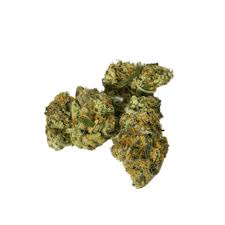
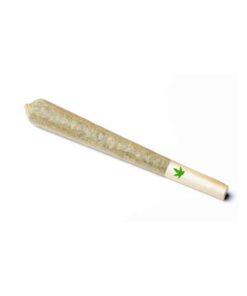
Decarboxylation is the process of heating cannabis to convert THCA — the non-intoxicating acid found in raw flower — into THC. Without it, edibles are weak or ineffective, because raw cannabis contains very little active THC. A common approach is around 110°C (230°F) for 30-45 minutes, which converts most of the THCA while limiting terpene loss.
Why it is necessary
Raw cannabis contains THCA, not THC. THCA carries an extra carboxyl group that stops it binding effectively to the CB1 receptors responsible for intoxication. Heat drives off that group as carbon dioxide, leaving THC behind. See our fuller explanation of what THCA is.
When you smoke or vape, this happens instantly at the point of combustion. When you cook, it does not — the temperatures in most infusion recipes are too low and too brief to do the job reliably. That is why the flower must be decarbed as a separate step first.
The temperature trade-off
This is the part most guides skip. Decarboxylation is a function of both temperature and time, and the two trade against each other:
- Lower and slower preserves more terpenes, so the result tastes and smells better, but takes longer.
- Higher and faster converts quickly but drives off volatile terpenes and can begin degrading THC into CBN, which is more sedating.
Most terpenes are volatile well below the temperatures used for decarbing — which is why aggressively hot decarbs produce a flat, generic-tasting edible.
A practical oven method
- Preheat to about 110°C (230°F). Use an oven thermometer — domestic ovens routinely run 10-15° off, and that margin matters here.
- Break the flower up coarsely by hand. Do not grind it to powder; fine material scorches at the edges.
- Spread it in a single even layer on a parchment-lined tray.
- Cover loosely with foil to trap some of the terpenes that would otherwise escape.
- Heat 30-45 minutes, stirring gently once halfway for even exposure.
- Cool completely before handling. Warm flower is brittle and sheds trichomes.
Properly decarbed flower turns from bright green to a light toasted brown and smells noticeably stronger. Dark brown or blackened means it went too far.
Doing it in a jar
Placing the flower in a sealed mason jar in the oven is popular because the jar traps terpenes that would otherwise evaporate. It works, though heat transfer is slower and less even, so give it a little longer and shake the jar periodically. Leave the jar loosely closed rather than fully sealed — pressure needs somewhere to go.
After decarbing
Decarbed flower is ready to infuse into butter or oil. Fat matters: cannabinoids are fat-soluble, so they need a fat to bind to. Butter, coconut oil and olive oil all work.
Kief and hash need decarbing too, and being more concentrated, they need slightly less time. Watch them closely.
Dosing, honestly
Home infusion is imprecise. You cannot know your exact potency without lab testing, and losses vary with technique. Treat any homemade edible as an unknown until you have tested it carefully — start with a very small portion and wait a full two hours before considering more. Our guide on edible onset times covers why that wait matters so much.
Store finished edibles clearly labelled and well away from children and pets. This matters more with edibles than any other format, because they look like ordinary food.
Questions fréquemment posées
What is decarboxylation?
Heating cannabis to convert non-intoxicating THCA into active THC.
What temperature should I decarb at?
Around 110°C (230°F) for 30-45 minutes is a common balance between conversion and terpene preservation.
Do I have to decarb before making edibles?
Yes. Without it, most of the THCA never converts and the edible will be weak.
Can I decarb at a higher temperature to save time?
You can, but you lose terpenes and risk degrading THC into CBN, which is more sedating.
How do I know it worked?
The flower turns light toasted brown and the aroma intensifies. Dark brown means it overcooked.
Do I need to decarb kief and hash?
Yes, but they are more concentrated, so they need slightly less time and closer attention.
Does smoking require decarbing?
No — combustion converts THCA to THC instantly.
 WhatsApp

 THC Capsules 400mg
1 × $9.00
THC Capsules 400mg
1 × $9.00  THC Capsules 400mg
  THC Capsules 200mg
  Green Crack - Indica AA
  Green Crack – Indica AA BULK
  THC Capsules 50mg