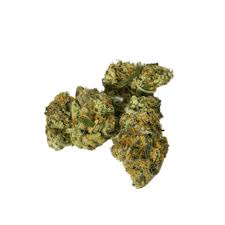
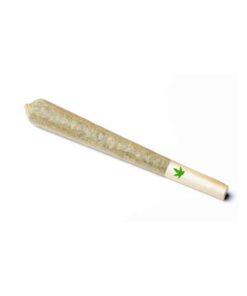
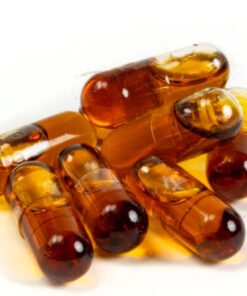
THCA (tetrahydrocannabinolic acid) is the non-intoxicating compound found in raw, unheated cannabis. It converts into THC when heated — through smoking, vaping or baking — in a reaction called decarboxylation. Raw cannabis will not get you high, because almost all of its THC is still locked up as THCA until heat is applied.
THCA vs THC
They are closely related molecules. THCA carries an extra carboxyl group (a COOH cluster) that THC does not. That group is the whole difference — and it matters because it changes the molecule’s shape enough that it does not bind well to the CB1 receptors in the brain responsible for intoxication.
Apply heat and that carboxyl group is released as carbon dioxide. What remains is THC, which binds to CB1 readily.
- THCA — present in raw and freshly harvested cannabis. Non-intoxicating.
- THC — created when THCA is heated. Intoxicating.
Why lab labels show both
This confuses a lot of people looking at a certificate of analysis. A label might read 22% THCA and 0.8% THC, and buyers assume the product is only 0.8% potent. It is not.
Because some THCA is lost as CO2 during conversion, you cannot simply add the two numbers. The standard industry calculation applies a conversion factor of roughly 0.877, reflecting the mass lost:
Total potential THC = (THCA × 0.877) + THC
So 22% THCA plus 0.8% THC gives roughly (22 × 0.877) + 0.8 = about 20.1% total potential THC. That is the number that reflects what you will actually experience.
What heat does
Decarboxylation is not instant — it depends on both temperature and time. Smoking and vaping convert THCA almost immediately because of the high heat. Baking requires a deliberate step, which is why edible recipes tell you to heat the flower before infusing it into butter or oil. Skip that and the result is disappointingly weak.
Does raw cannabis do anything?
Some people juice or eat raw cannabis leaves specifically to consume THCA without intoxication. Early preclinical research has examined THCA for anti-inflammatory and neuroprotective properties, but the honest position is that human evidence is limited and preliminary. It is an area of active study rather than settled science.
We are not medical professionals and this is not medical advice. If you are considering cannabis for a health condition, speak with a doctor or pharmacist.
Storage matters
THCA slowly converts to THC over time, and THC slowly degrades to CBN — a process accelerated by heat, light and air. This is why poorly stored flower loses potency and tends to feel more sedating as it ages. Airtight glass, kept cool and dark, slows both reactions. See our storage guide for the specifics.
Frequently asked questions
Does THCA get you high?
No. THCA is non-intoxicating until heat converts it into THC.
What is the difference between THCA and THC?
THCA has an extra carboxyl group that prevents it binding well to CB1 receptors. Heat removes that group, producing THC.
How do I calculate total THC from a lab label?
Multiply THCA by 0.877 and add the listed THC. The factor accounts for mass lost as CO2 during conversion.
Why is the THC number on my label so low?
Because most of the potency is still listed as THCA. Unheated flower genuinely contains very little active THC.
Do I need to decarb before making edibles?
Yes. Without heating first, most of the THCA never converts and the edible will be weak.
Does THCA turn into THC on its own?
Slowly, over time — accelerated by heat and light. This is part of why old flower loses potency.
 Whatsapp

 THC Capsules 400mg
4 × $9.00
THC Capsules 400mg
4 × $9.00  THC Capsules 400mg
  THC Capsules 200mg
  Green Crack - Indica AA
  Green Crack – Indica AA BULK
  1G Quad Pre- Roll